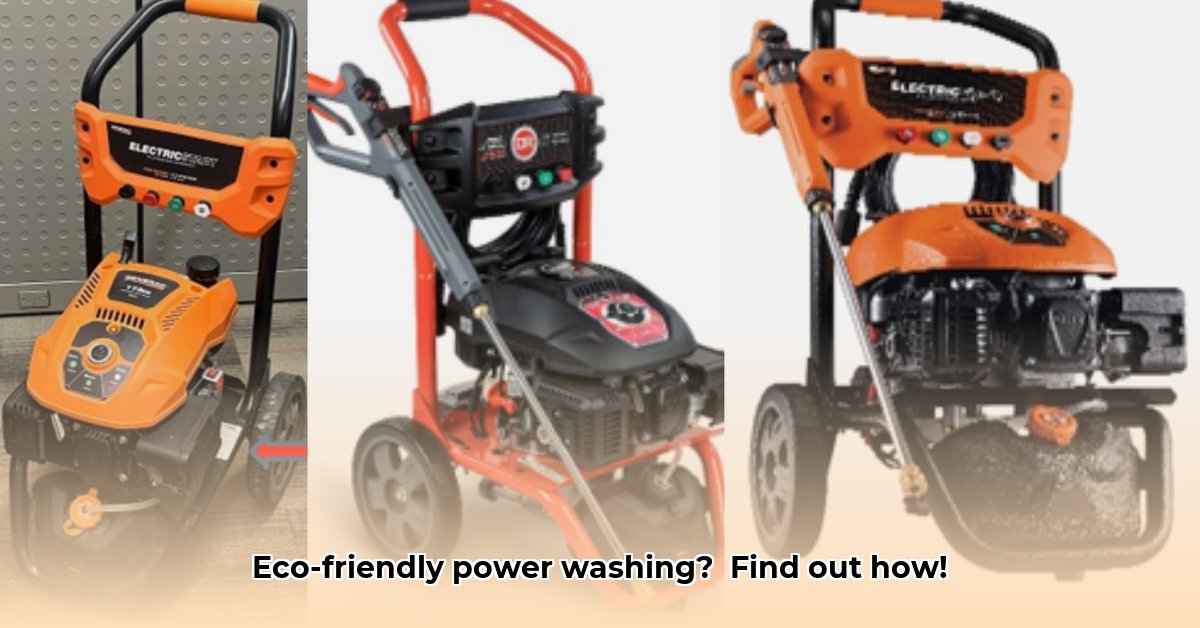
Keeping your farm equipment clean is crucial for its longevity and efficiency, but traditional methods can be harsh on the environment. Pressure washers offer a powerful, convenient alternative, but choosing the right one and using it responsibly is key to minimizing your environmental footprint. This guide shows you how to select and utilize a pressure washer sustainably on your farm. For even more heavy-duty cleaning needs, check out dump trailers.
Choosing the Right Power Washer for Your Farm
Selecting the ideal pressure washer from Tractor Supply depends on your specific needs and your commitment to eco-friendly practices. Three main types exist: gas, electric, and battery-powered.
Gas-powered power washers: These offer high cleaning power, but they also consume significant fuel and release emissions. Think of them as the muscle car of power washers – powerful, but not the most fuel-efficient. Is the extra cleaning power worth the environmental cost for your specific farming needs?
Electric power washers: These are more environmentally friendly, quieter, and require less maintenance. They are the eco-conscious choice, but may lack the raw power of gas-powered models. They're the reliable sedan – dependable and efficient. You'll need a nearby power outlet.
Battery-powered power washers: These provide a compromise between power and environmental impact. They're relatively quiet, produce fewer emissions than gas models, and are portable. But, battery life is a limiting factor. They're like a hybrid vehicle – a blend of power and efficiency. What's the balance between power, portability, and recharge frequency that best suits your farm's needs?
Here's a comparison to aid your decision:
| Power Washer Type | Pros | Cons | Sustainability Rating |
|---|---|---|---|
| Gas-Powered | High cleaning power, long run time | High fuel consumption, air pollution | Low |
| Electric | Environmentally friendly, quiet, low maintenance | Lower power output, needs a power source | High |
| Battery-Powered | Portable, quiet, lower emissions, no cords | Limited run time, needs recharging, may cost more initially | Medium |
Consider your cleaning tasks. Do you need the immense power of a gas model, or would an electric or battery-powered option suffice? Also, consider water usage; models with lower gallons-per-minute (GPM) ratings use less water, critical in water-stressed regions. How much water do you realistically need to use to effectively clean your equipment?
Efficient Pressure Washing Techniques for Sustainable Farming
Optimizing your pressure washer’s use and minimizing environmental impact requires more than just selecting the right machine. These tips maximize efficiency and minimize environmental impact:
Prep Work: Remove loose debris before washing to prevent nozzle clogging, saving time, water, and energy.
Pre-soaking: Use a biodegradable cleaner to loosen dirt before using water, reducing pressure and water needs.
Systematic Cleaning: Work from top to bottom to prevent recontamination.
Targeted Cleaning: Focus the nozzle on specific areas, avoiding overspray.
Regular Nozzle Checks: Clogged nozzles reduce efficiency and increase water usage.
Water Recycling (If Possible): If feasible, collect and filter wastewater for reuse.
Extending the Life of Your Power Washer
Proper maintenance extends your pressure washer’s lifespan and improves efficiency.
Consult your owner's manual: This is your primary resource for specific maintenance instructions.
Clean the nozzle regularly: Crucial for maintaining spray patterns and performance.
Flush the system: After each use, flush with clean water to prevent mineral buildup.
Proper storage: Store indoors to prevent damage and corrosion. How will you store your pressure washer to optimize its lifespan?
Future Trends in Sustainable Pressure Washing
Expect advancements in pressure washer technology, including:
More efficient motors: Expect more powerful electric and battery-powered options with extended run times.
Advanced nozzle designs: Improved designs for more precise cleaning and reduced water usage.
Improved water filtration systems: Better filtration for more effective water recycling.
Biodegradable cleaning solutions: Wider availability of environmentally friendly cleaning agents.
Key Takeaways: Sustainable Pressure Washing on Your Farm
- Electric pressure washers significantly benefit the environment versus gas models.
- Water conservation techniques are essential for sustainable pressure washing.
- Biodegradable cleaning solutions reduce environmental impact.
- Proper maintenance extends equipment lifespan and reduces waste.
- Consider the long-term cost-benefit analysis when selecting a pressure washer.
By making informed choices about your pressure washer and using it efficiently, you’re not just cleaning your equipment; you’re contributing to a healthier, more sustainable farm operation. Even small changes can have a big impact.